On November 10, 2026, Ring, Amazon's doorbell-camera brand, announced Ring Robotics, a new division aimed at automating security at home and in the workplace. It launched with two devices: Ring Drone Cam, an indoor flying camera, and Ring Rover Cam, a wheeled patrol robot built for businesses. For software teams and anyone running a shop, warehouse or office, this is a launch worth watching, even if plenty of questions remain open.
Ring Drone Cam: a camera that flies from room to room
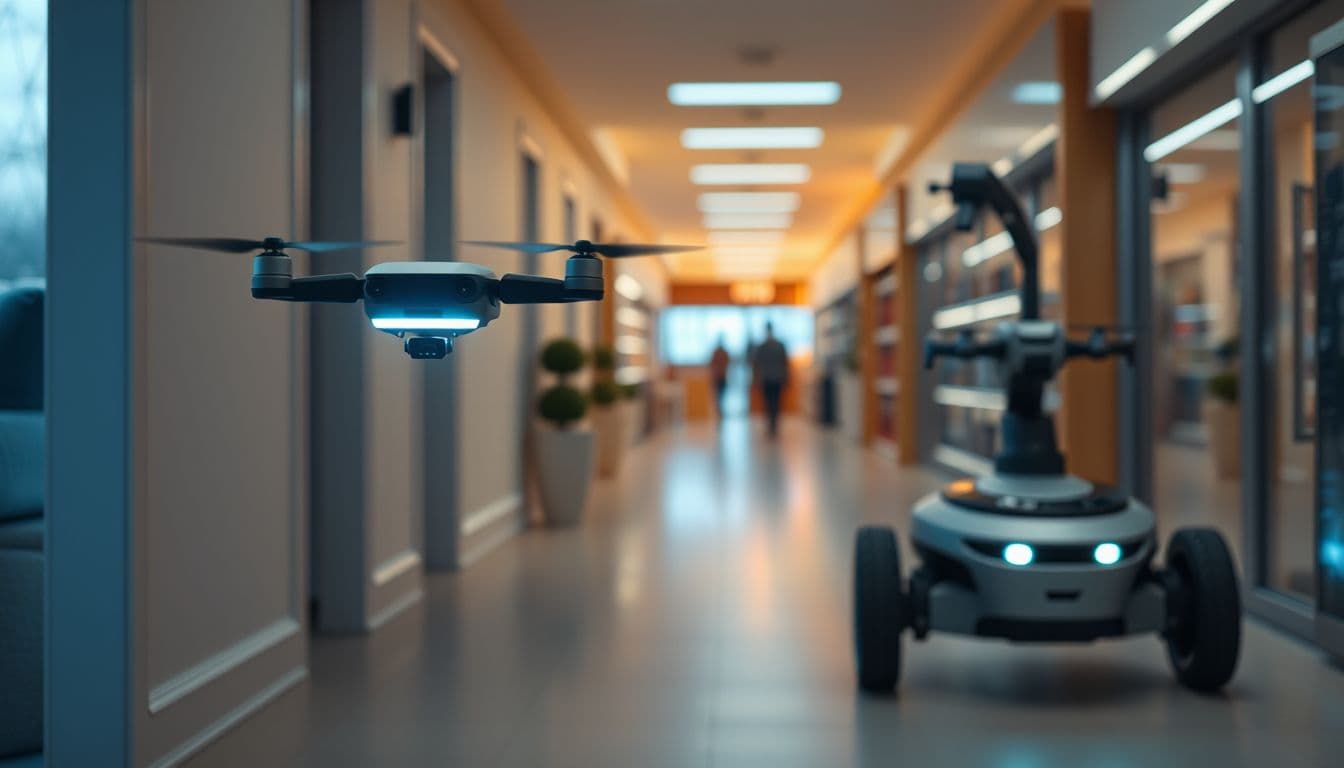
Ring describes Drone Cam as a "flying indoor security camera." Instead of staying fixed in one corner, it moves through the house, checks what is going on and alerts the owner when something looks wrong. Between jobs, it rests in a docking bay.
The real hook is integration with the rest of Ring's lineup. If an alarm trips at the back door, the drone is meant to fly there and investigate. It records 2K video, has LED lights for low-light footage at night, and can be controlled through Amazon's Alexa Home Map. Owners can also schedule patrols, say for a night out or a long vacation.
Ring Rover Cam: a rolling guard for stores and offices
The second device targets companies. Rover Cam follows routes and schedules that the manager sets, and streams continuous 4K video to Ring's mobile app. A trigger can start recording automatically when it detects a person.
It also carries an adjustable periscope camera for seeing over obstacles, plus two-way audio. That lets a remote operator speak directly with whoever is in the store, whether that is an employee or an intruder. Ring pitches it as a guard who never clocks out, but that is the company's own marketing line, and no independent testing has backed it up yet.
AI Pilot: one brain and a self-drawn map of the space
Both machines run on the same proprietary system, called AI Pilot. According to Ring, it combines specialized vision models, sensors and cloud processing so the devices can see, think and navigate on their own. They are designed to build a detailed map of a home or office simply by exploring it, with no manual mapping.
For software people, this is the interesting layer. The value of the product sits in the orchestration software: reading sensor events, choosing a destination, processing images and pushing alerts to an app. The hardware is just the vehicle. It echoes a theme we covered in our piece on Automattic's Spacefast and vibe-coded app deployment, where the software experience decides whether a product lands.
Pricing, release dates and the shadow of Astro
According to TechCrunch, Rover Cam goes on sale December 16 at about $1,000. Drone Cam arrives later, on January 27 next year, at $270.
| Device | Audience | Release date | Price |
|---|---|---|---|
| Ring Drone Cam | Households | January 27 (next year) | $270 |
| Ring Rover Cam | Businesses | December 16 | $1,000 |
Security robots are a category the tech industry has never quite cracked. Amazon launched its Astro robot in 2021, first as a household helper and later repositioned as a security guard for small businesses. It never took off, and Amazon discontinued the business version. Ring says Rover was inspired by feedback from Astro customers, so this is essentially a second attempt with a revised recipe.
Privacy: the question without a full answer
Ring has long faced criticism that its cameras form an informal surveillance network that police can tap into. Devices that fly and roll around make those concerns harder to dodge.
The company says privacy and security are built in. Video from both devices is protected by TAKE (Throw Away the Key Encryption), which Ring calls its strongest default encryption yet. Still, it is unclear whether users will get a local storage option, while Ring cameras typically save footage to the cloud.
What businesses should prepare before considering a security robot
If you manage a retail chain, a warehouse or an office, there is no need to rush a purchase. A few steps are worth taking now:
- Review your video data policy: who can view footage, how long it is kept, where it is stored, and whether that fits personal-data regulations.
- Assess integration needs: a robot is only useful if it connects to your existing alarms, sensors and response procedures.
- Pilot small: wait for independent reviews after release to see how it copes with stairs, narrow aisles or dim lighting.
- Count the total cost: beyond the device price, factor in operations, connectivity and the staff who monitor it.
For developers, AI-enabled sensor hardware is opening up demand for mobile apps, dashboards and system integrations. It is part of the same broader wave of hardware diversification we looked at in our article on wide foldable phones after the iPhone Duo.
Conclusion
Ring Robotics brings robots into home and business security with two products that have clear launch dates. Whether they succeed will depend on real-world reliability, price and how much users trust Ring on privacy. Astro's history shows a good idea is not enough.
If your company is planning software that integrates smart devices, monitoring apps or video data management, get in touch with the Besoft team for tailored advice.
Sources
- TechCrunch, Lucas Ropek, November 10, 2026: Ring, known for its doorbell cameras, launches a home security drone and an enterprise security robot
- TechCrunch, July 3, 2024 (Astro background, linked from the article above): Amazon discontinues Astro for Business security robot