On November 2, 2026, Northwood Space raised $375 million in a Series C round that values the company at $2 billion. The startup doesn't launch satellites. It builds the less glamorous half of the equation: the ground network that lets satellites talk to Earth. For software teams, the interesting part is how that hardware is wrapped in an API and scheduling software.
The $375M Series C: who invested and what it's for
According to the company's announcement and TechCrunch's report the same day, Andreessen Horowitz (a16z) and DFJ Growth co-led the round. Washington Harbour Partners, which led the Series B, followed on, along with Alpine Space Ventures, Stepstone, In-Q-Tel and others. A separate multi-year credit facility from HSBC Innovation Banking adds working capital for network expansion.
Northwood says the money will go toward delivering on existing contracts, hiring, and building out a global ground network for commercial, U.S. government and allied missions. Founded in 2022, the company is led by co-founder and CEO Bridgit Mendler, a former actress.
The pace is brisk. Northwood closed a $100 million Series B in January 2026, alongside a roughly $50 million U.S. Space Force contract to upgrade the satellite control network. Less than nine months later, it is back with a round more than three times larger.
Why the ground has become the bottleneck for satellites
By Northwood's own figures, active satellites grew from about 3,000 in 2020 to more than 14,000 by the end of 2025, with far more expected by 2030. More satellites mean more data to bring down, but the number of ground stations hasn't kept up.
Companies like SpaceX and Amazon build and run their own ground stations for their satellite internet networks. Everyone else typically rents capacity from third parties, and that capacity isn't always available. That gap is exactly what Northwood is targeting. A 2023 GAO report, cited by TechCrunch, noted that the Department of Defense has known about capacity problems in the satellite control network since 2011.
Modular antennas and array software: what Northwood does differently
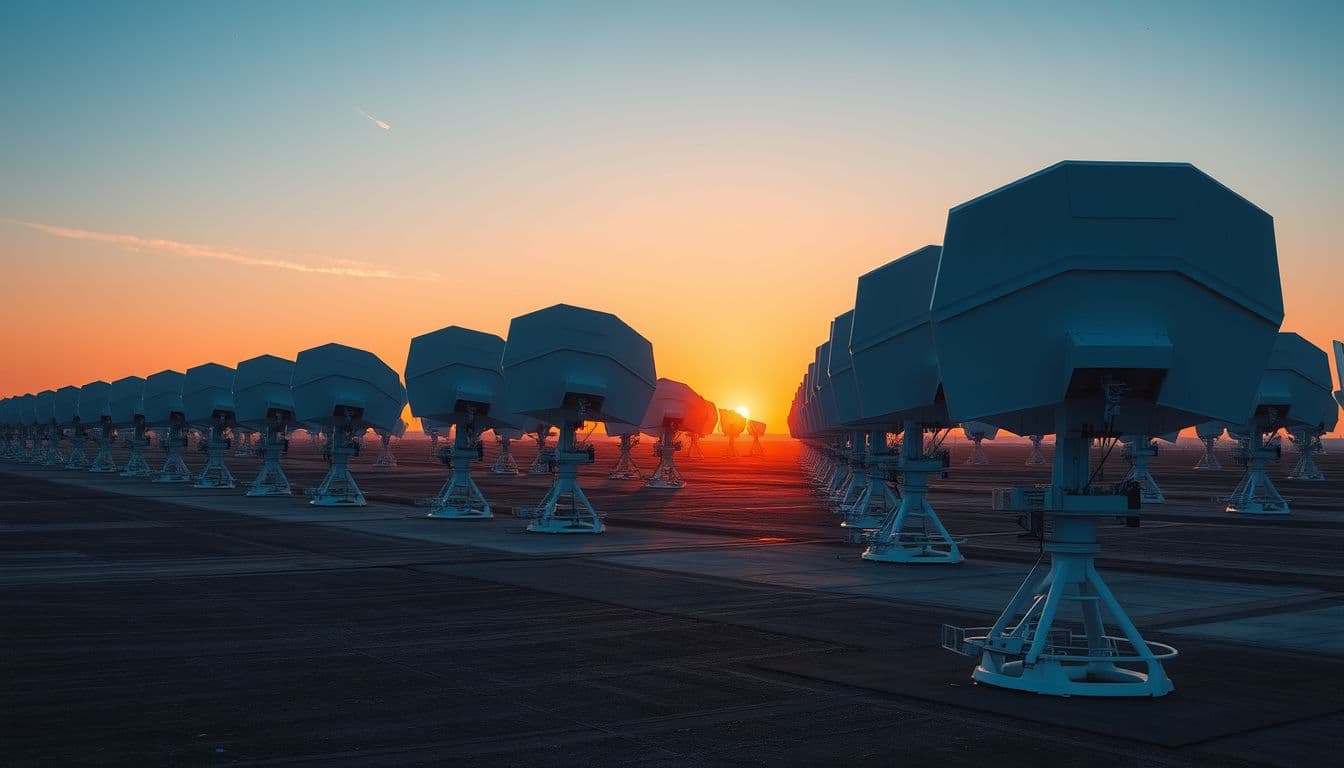
Instead of building giant dishes, Northwood designs and manufactures modular antennas at its Torrance, California facility. There are two main product lines: Portal, a phased-array antenna for command and control, and Prism, a high-throughput dish meant for multi-gigabit payload links.
A few company-reported figures show how fast it wants to deploy:
- A new site takes about three months to build, rather than years.
- New antennas go from truck arrival to live links in three to four hours.
- Its software combined 10 Portal antennas to match the receive performance of a 20-foot dish.
- The goal is sites capable of 100+ Gbps in high-demand regions by the end of 2027.
These numbers come from the company and haven't been independently verified, so read them as targets and test results rather than commercial guarantees.
From scheduling API to shared network
The part that will feel familiar to developers is the service model. Satellite operators can search, reserve, update and cancel passes on the network through a modern API, instead of spending millions on dedicated ground stations. Human "Mission Architects" guide each customer from the first conversation through deployment.
In effect, physical infrastructure is packaged as a service you call from code, much as cloud computing did for servers. That raises problems any engineering team knows well: designing an API that holds up under load, scheduling a scarce resource, monitoring in real time, and securing critical control channels. If platform design interests you, our posts on TypeScript 7's Go-based compiler and what's new in Java 27 point to the same trend: platforms need to be faster and safer to handle new scale. (Both posts are in Vietnamese.)
Scaling up, and what to watch next
Since its Series B, Northwood says it has put six multi-orbit-capable sites into operation across two continents, demonstrated geosynchronous satellite command from a commercial phased array, and opened a 185,000-square-foot headquarters and factory in Torrance in September 2026. The team now exceeds 140 people, with plans to add 400 jobs over three years across RF engineering, manufacturing, software and site operations.
Three things are worth watching: whether the shared-network model stays reliable as customers multiply, whether the 100 Gbps target arrives on schedule, and how long-established competitors respond. The $2 billion valuation also reflects investors' strong appetite for foundational and defense-related tech.
Lessons for businesses and software teams
Satellites may be far from most businesses' daily work, but the model offers a few takeaways:
- Infrastructure can be a software product. The value sits in the orchestration layer and API, not just the hardware.
- Standardize to scale. Modular antennas and a deployment measured in hours let you expand quickly without starting over.
- Vertical integration can be an edge when capacity is scarce and customers don't want to build infrastructure themselves.
The domestic backdrop is favorable too: our report that Vietnam's digital technology industry grew 32.1% in the first nine months of 2026 (in Vietnamese) shows demand for software and digital infrastructure remains strong.
Conclusion
Northwood Space's November 2, 2026 round shows capital flowing hard into space infrastructure, with orchestration software as half of the story. If your business is weighing turning an operational capability into an API-driven service, or building a platform that has to scale fast, talk to the Besoft team about the right approach.
Sources
- Northwood raises $375 million to build the network connecting satellites to Earth – Northwood Space, Nov 2, 2026
- Northwood Space raises $375M Series C at a $2B valuation from a16z and DFJ Growth – TechCrunch, Nov 2, 2026
- Northwood Space secures a $100M Series B and a $50M Space Force contract – TechCrunch, Jan 27, 2026